
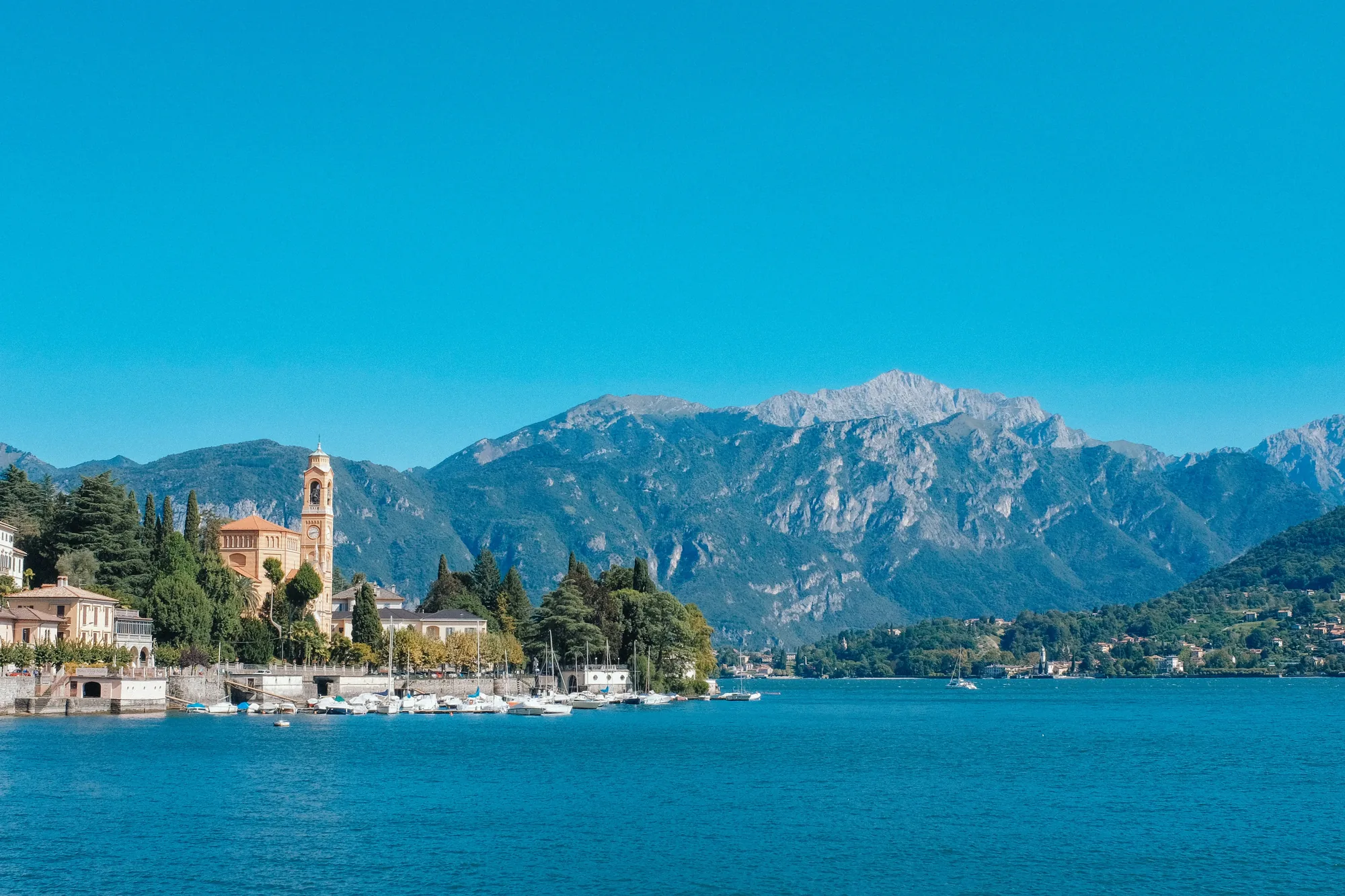
Lago di Como · Il Lario
Discover Lake Como
From Bellagio to Varenna, from Como to Menaggio: Cà de Sura sits in the heart of the stretch many consider the most beautiful and striking landscape on the Lario. Here historic villas, old lakefront villages, gardens, churches and panoramic paths come together in an extraordinarily dense and beautiful tableau. Tremezzina is the ideal base — quiet, and at the same time excellently connected to the lake's most important places.
Highlights
Como is the elegant urban gateway to the lake — a city where Roman traces, medieval fabric and Neoclassical lakefront architecture come together with remarkable ease. The Duomo Santa Maria Assunta, begun in 1396 and crowned with its dome in 1744, is among the most important sacred buildings in northern Italy. Add to that the Romanesque Basilica of Sant'Abbondio, the historic fortifications, and a cultivated urban depth that lifts Como well beyond the role of mere starting point for excursions.
Como is also a city of science, craft and design. The Tempio Voltiano on the lakefront is the only museum in the world devoted entirely to a single scientist. The Museo della Seta di Como tells the story of the city as Europe's leading silk centre and brings its great textile tradition into focus. To sweep your eye across the lake and the foothills of the Alps, take the historic funicular up to Brunate, just a few minutes away. Villa Olmo, on the shore, now serves as a venue for exhibitions and events. Football fans: FC Como 1907 is currently in Serie A — playing at the Stadio Sinigaglia right on the water.
Bellagio sits at the tip of the peninsula that divides the two southern arms of the lake, and has always been Lake Como's iconic image. The town lives by its steep lanes, its stone stairways, its small squares and that particular topographic tension between waterline and height that gives it its unmistakable charm. Despite its global fame, Bellagio retains a quiet, almost contemplative beauty in the calmer hours of the day.
Among Bellagio's great addresses are the gardens of Villa Melzi d'Eril, now open daily and among the most cultivated garden estates on the lake. Equally special is the park of Villa Serbelloni, accessible only on guided tours — booking is now mandatory and online, and it's exactly this limited access that lends the place its discreet prestige.
Tremezzina is the municipality in which Cà de Sura sits, and one of the most cultivated stretches of the entire Lario. The present-day commune brings together historic villages such as Tremezzo, Lenno, Mezzegra and Ossuccio; along its shores you find some of Lake Como's most familiar images: villas, churches, olive groves, promenades and wide views across the middle basin.
Among its highlights are Villa Carlotta, Villa del Balbianello, Isola Comacina and the Greenway del Lago di Como. Officially described as a gentle panoramic route, the Greenway runs about ten kilometres through old villages, past villas, gardens, and Romanesque and Baroque churches, following in part the historic Via Regina. Also nearby: the Museo della Barca Lariana — about 15 km away — dedicated to the lake's traditional boat types and boat-building culture. The ferry piers at Tremezzo and Lenno link the commune to Bellagio, Varenna, Menaggio and Como.
Among the villages of the middle lake, Menaggio has a particularly lively, almost small-town air. Its piazza, lakeside promenade, shops and cafés give it an openness that sets it apart from the purely picturesque lakeside village. At the same time, Menaggio remains tightly bound to the lake and the mountains, making it one of those rare places where strolling, everyday life and a base for excursions come together almost perfectly.
Just above the town, in Loveno di Menaggio, lies Villa Vigoni. Today it is the Italian-German Centre for European Dialogue, spread over some 40 hectares. The park — with its ancient trees and carefully composed sightlines — is one of the most extraordinary on the lake; public tours are offered regularly from March to October (except in August). Menaggio is also an excellent starting point for mountain walks on La Grona (1,736 m).
Varenna is among the most atmospheric places on the east shore. Between its coloured houses, narrow alleys and small harbour, the village unfolds a quiet, almost Mediterranean elegance. Particularly characteristic is the Passeggiata degli Innamorati, the lakeside walk that leads from the ferry pier to the historic core and is one of the most romantic promenades on the lake. Contrary to common belief, Varenna is reachable not only by boat but also conveniently by train.
Cultural highlights include Villa Monastero, with its nearly two-kilometre-long botanical lakefront garden, and the Castello di Vezio above the village. Villa Monastero belongs to the Province of Lecco; the garden and house-museum are open to the public. The Castello di Vezio is open daily from 1 March to 1 December and offers one of the most striking viewpoints over the middle basin.
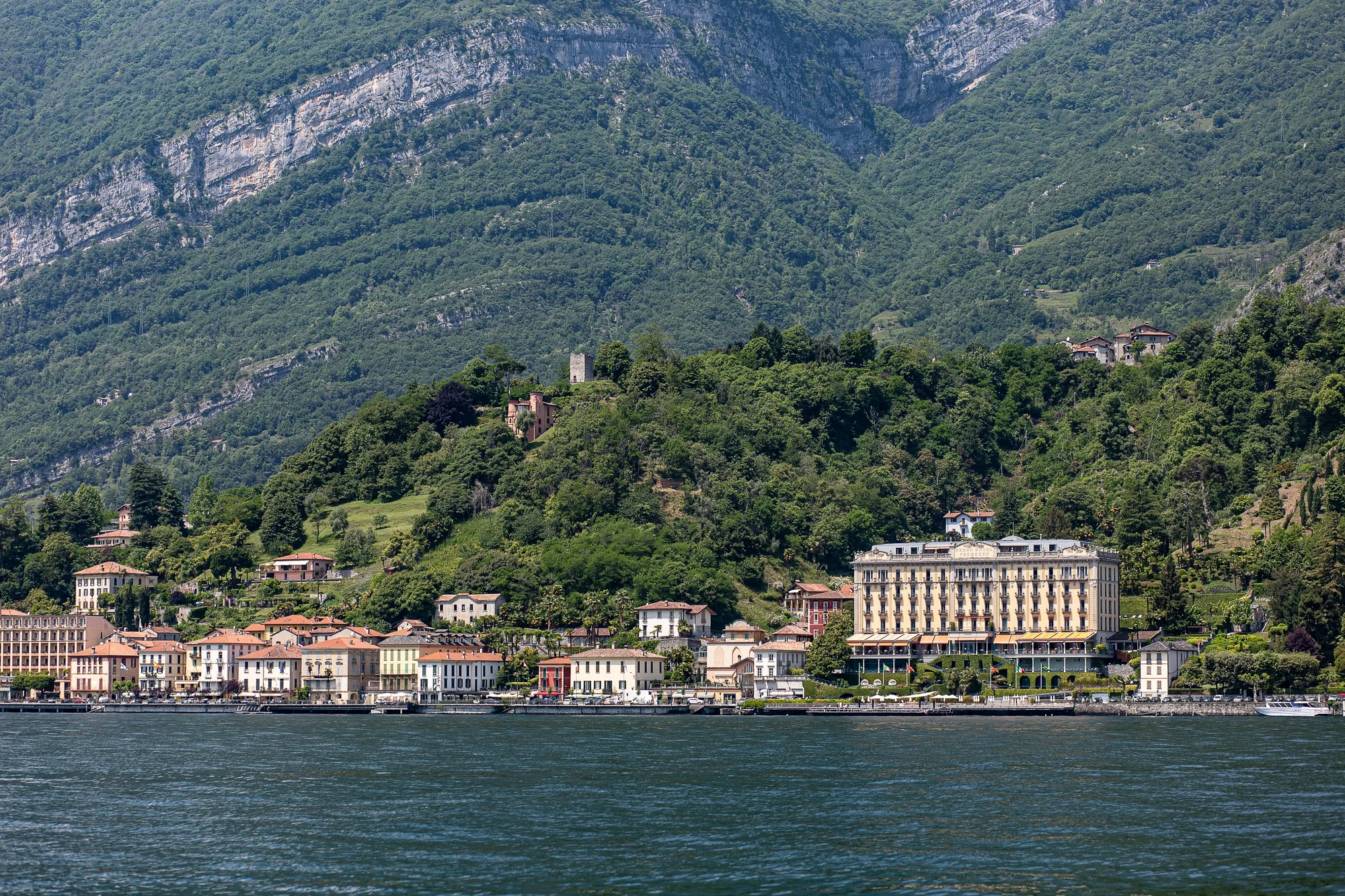
Just a few kilometres south of Como lies Cernobbio, long associated with cultivated lakeside aristocracy and international grand-hotel tradition. At the centre of this aura stands Villa d'Este: built as a noble residence in the 16th century, it is today an icon of international luxury hospitality and one of the lake's great historic addresses. Its view from the water — white façade, opulent garden, lakefront setting — is one of the unforgettable images of the Lario.
A very different but equally rewarding side of Cernobbio is revealed by Villa Bernasconi. This significant Art Nouveau building was erected for Davide Bernasconi and is open today as a public museum. Its ornamental façade — with references to silk production: silkworms, butterflies, mulberry leaves — makes it one of the most interesting architectural counterpoints on the lake.
On the upper west shore lies Dongo — a place that combines scenic calm with historical weight. The Museo della Fine della Guerra recalls that Benito Mussolini and several leading figures of the Repubblica Sociale Italiana were arrested here on 27 April 1945; the Palazzo Manzi, today the town hall, is itself a central site of memory from those final days of the war. The following day, on 28 April 1945, Mussolini was shot together with Claretta Petacci in Giulino di Mezzegra — the spot is still marked by a commemorative cross.
Lecco marks the southern end of the eastern arm of the lake and has a notably different feel from the classic villa towns of the middle basin. Here the forms of the Grigna (2,410 m) and the Resegone (1,875 m) press so close to the water that the lake takes on an almost alpine character. The city is closely linked to Alessandro Manzoni; the Promessi Sposi are set here, and the Villa Manzoni is open as a museum. Lecco stands for the rougher, less-staged side of the Lario — and for that reason feels particularly authentic.
Northeast of Lecco lies Mandello del Lario, home to Moto Guzzi since 1921. The Moto Guzzi Museum is currently being reorganised; visits are arranged through the official booking system. Also in Mandello: the Museo della Barca Lariana — one of the most significant historic boat collections in the world, telling two thousand years of seafaring history around Lake Como.
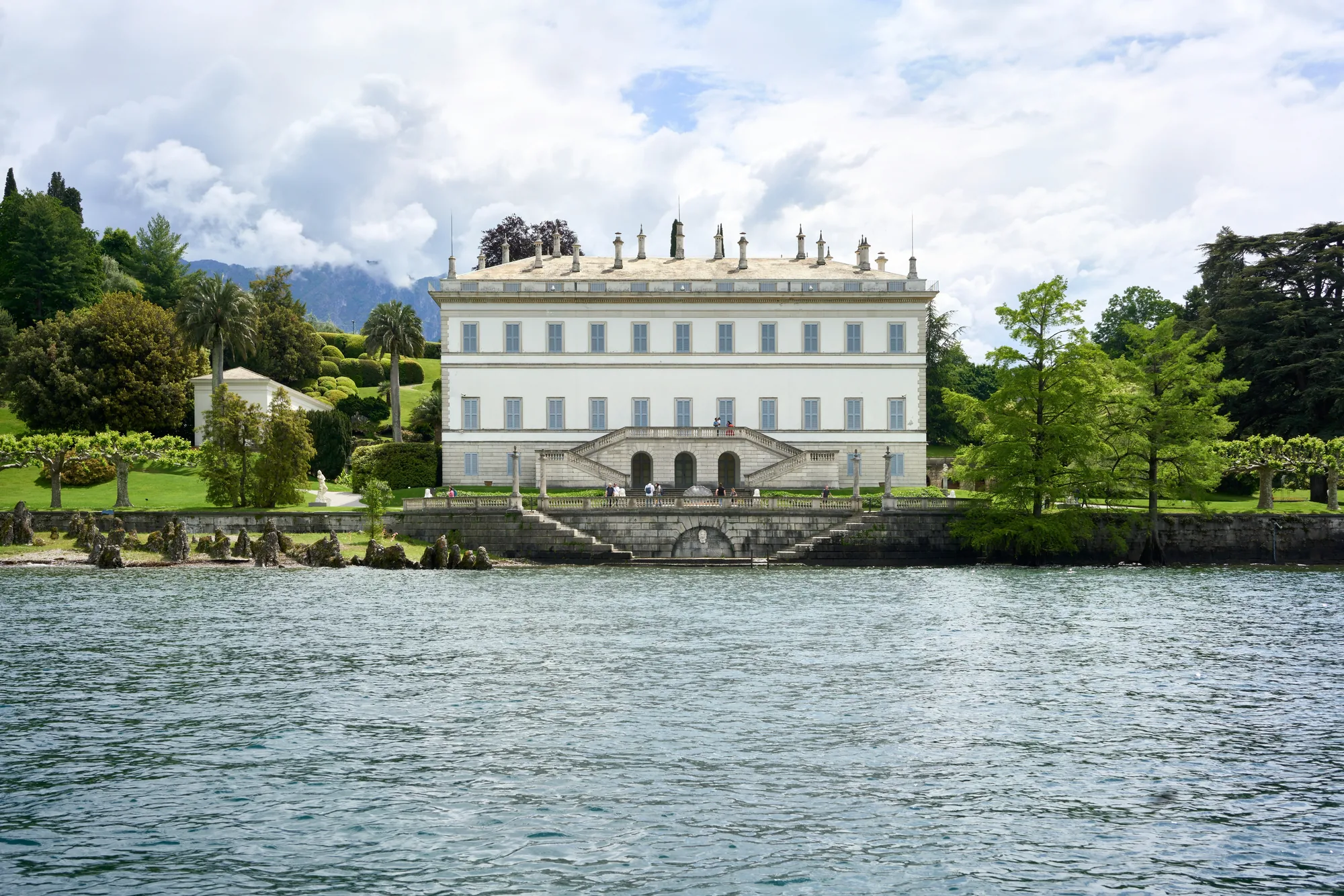
Lakefront Villas
Villa Monastero in Varenna (lakefront garden + museum, €13–15), Villa Melzi in Bellagio (Neoclassical park, €10) and Villa Vigoni in Menaggio (Italian-German cultural centre, no public access) embody the lake's extraordinary villa culture. Further south, Villa d'Este in Cernobbio — since the 16th century one of Europe's most legendary addresses, today a grand hotel — continues to dazzle.
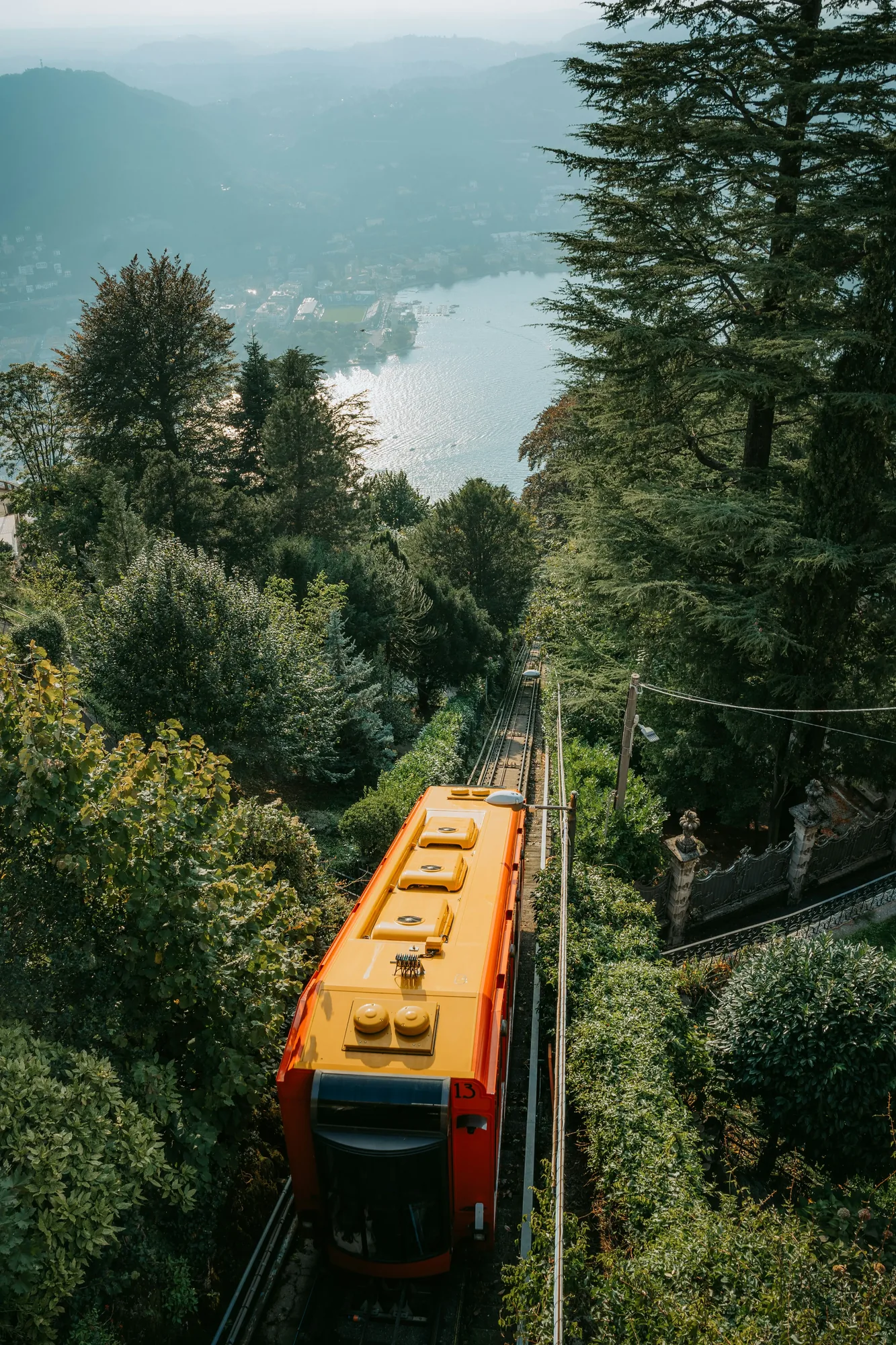
Cable cars & funiculars
The Argegno–Pigra cable car (about 15 min from Tremezzina) climbs 648 m in 4–6 minutes — one of the steepest cable cars in Italy. The view over the lake is breathtaking. In Como, the Brunate funicular reaches the city's mountain (715 m) in 7 minutes, with panoramas as far as the Alps and the Po valley. Both are easily reached by ferry. Funivia Argegno →
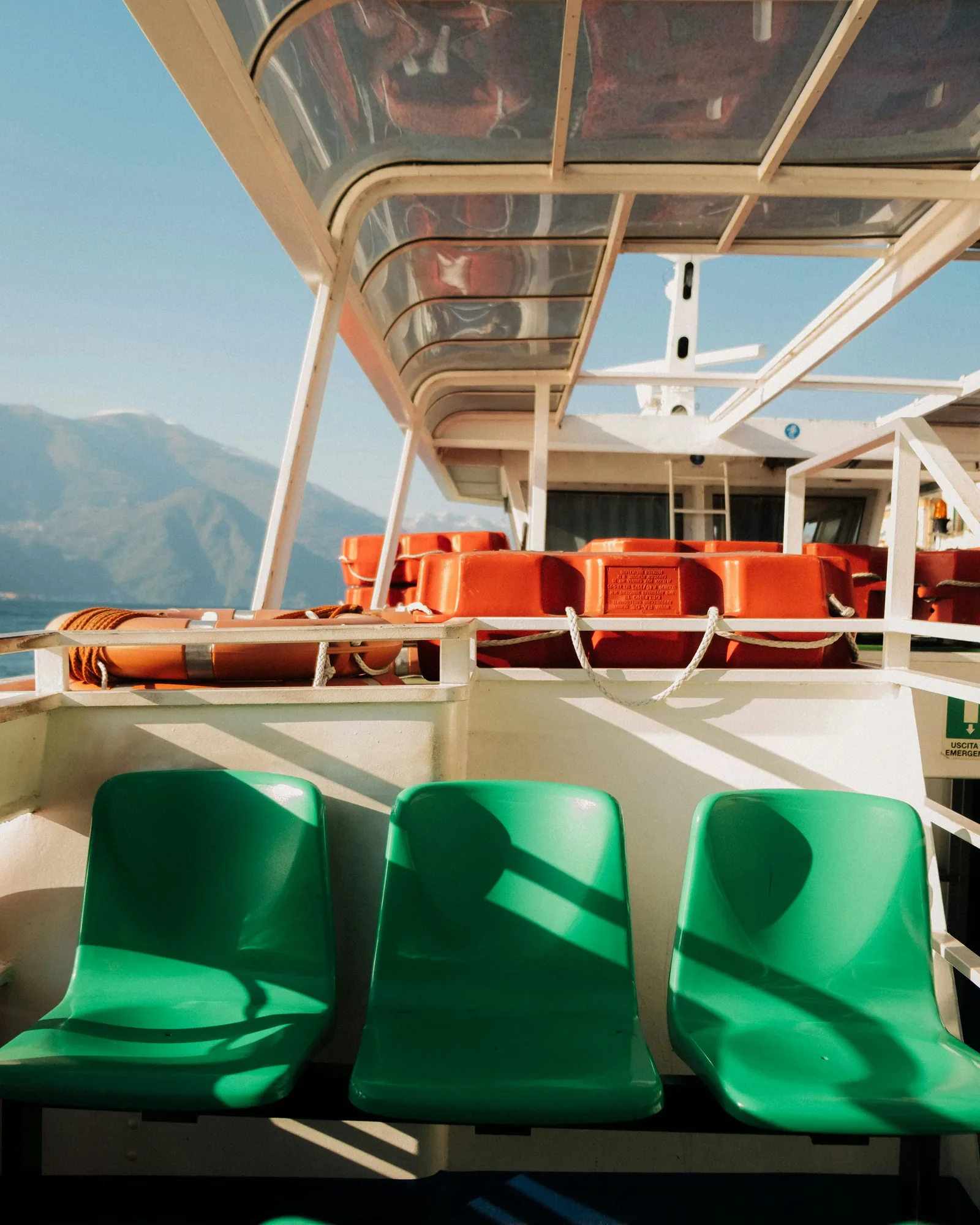
Per il lago — ferries
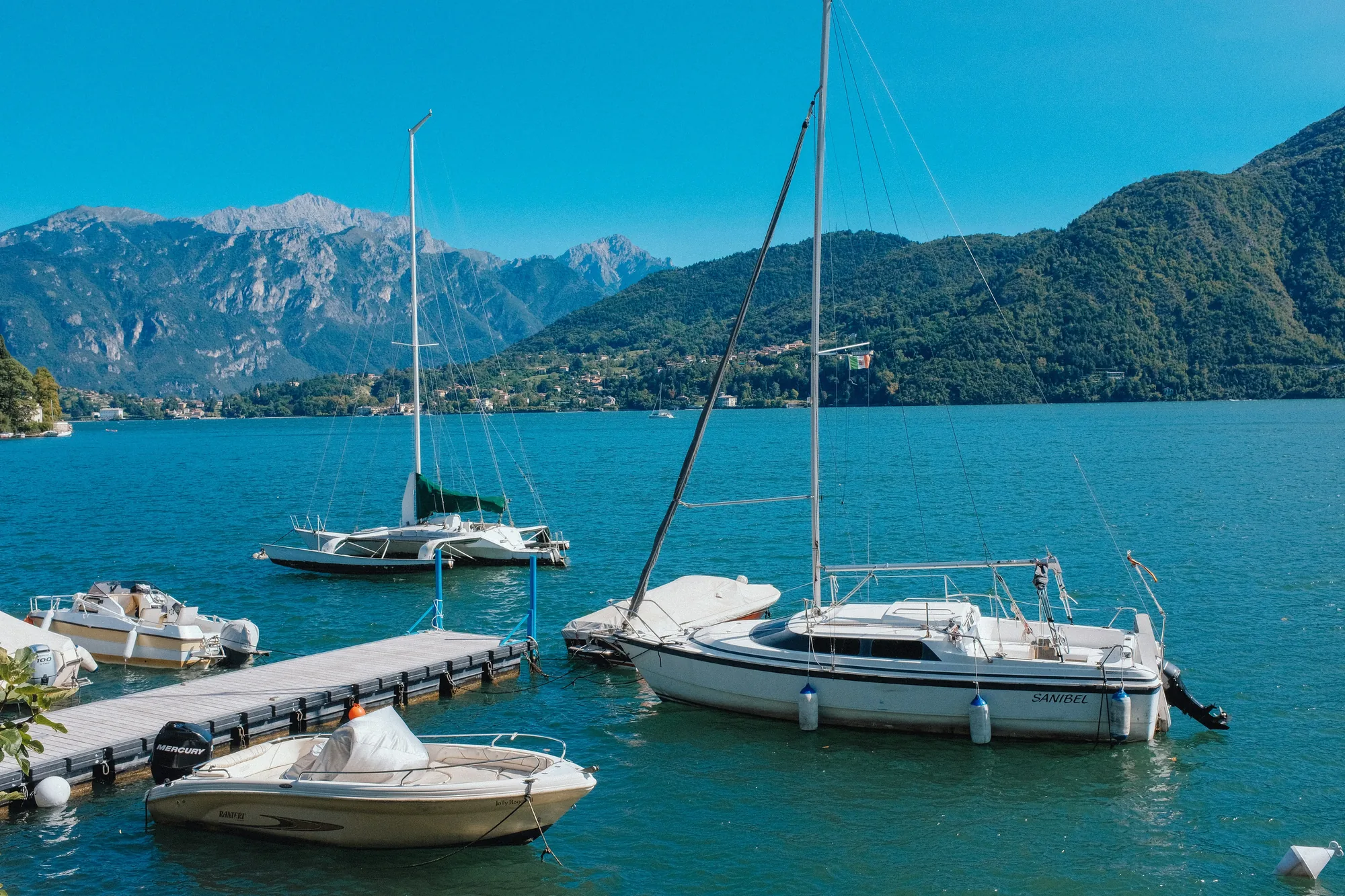
The Centrolago ticket from Navigazione Laghi (ca. €17.50/person) allows unlimited journeys in the central zone for one day — Menaggio, Bellagio, Varenna, Cadenabbia, Tremezzo, Lenno. Ideal for a circular trip with several stops: Bellagio in the morning, Varenna at midday, Menaggio in the afternoon. The piers at Tremezzo and Lenno are just minutes from Cà de Sura. navigazionelaghi.it →
Lakefront Villas
Villa Monastero in Varenna combines monastic origins with the elegance of a later private residence. Grown out of a 12th-century Cistercian convent, it now serves as a museum, conference venue and botanical garden all at once. Its lakeside garden runs for nearly two kilometres and is one of the most impressive linear garden landscapes on the lake.
Opening hours: April–October daily (except Tuesdays) from 9:30 AM. Admission: garden + museum €15, garden only €13. Children up to 14 free.
villamonastero.eu →Villa Melzi d'Eril in Bellagio embodies the early Neoclassical moment on Lake Como. Built in 1808–1810 for Francesco Melzi d'Eril, Vice-President of the Napoleonic Italian Republic, its gardens count among the most cultivated estates in the region — azaleas, rhododendrons, cedars, lotus blossoms and Japanese motifs combine landscape architecture, botanical variety and lakefront setting into a composition of great calm and nobility. The villa itself remains in private hands; the garden is open seasonally to the public.
Open 21 March to end of October, daily 10:00 AM–7:00 PM. Admission: €10 (children up to 11 free).
giardinidivillamelzi.it →Villa Serbelloni rises above Bellagio in an extraordinary panoramic position — on the highest point of the peninsula, from which all three arms of the lake can be seen at once. The estate is now used by the Rockefeller Foundation as a study and conference centre; the extensive park is accessible only on guided tours. Precisely this mix of history, view and restraint gives the place its particular aura.
Guided tours: April to October, daily except Mondays, at 11:00 AM and 3:30 PM. Duration ca. 90 min, admission ca. €9. Tickets at the Bellagio tourist information office — places limited, arrive early.
Villa Olmo is Como's great Neoclassical lakeside residence. Built 1782–1787 for the Odescalchi family, it has belonged to the city since the 19th century. The municipality describes it as an outstanding example of monumental Neoclassical architecture; today it serves as a venue for exhibitions, events and cultural life right by the water.
The extensive park is open daily, free of charge (summer until 11:00 PM, winter until 7:00 PM). Right next door: the Lido Villa Olmo — one of the few public lake bathing facilities on Lake Como.
Villa Bernasconi in Cernobbio represents the Art Nouveau side of Lake Como. Built 1905–1906 for the engineer Davide Bernasconi, the house is now both a museum and a cultural venue; its history is closely tied to the region's silk industry. The ornamental façade — with silkworms, butterflies and mulberry leaves — feels more intimate and more urban than many of the great lakeside villas, but no less architecturally impressive.
Open to the public; reached by boat (Cernobbio ferry pier) or by bus C10.
villabernasconi.eu →Some of the lake's most beautiful private villas lie in the stretch between Ossuccio, Bolvedro and Lenno. Villa Balbiano ranks among the most important historic residences on the west shore and still preserves 17th-century frescoes; the film House of Gucci (2021) made it known worldwide. Villa Sola Cabiati — an 18th-century Neoclassical villa now operated as part of the Grand Hotel Tremezzo — preserves exceptionally well-kept historic interiors. La Cassinella, finally, stands for that rare form of private seclusion that only really becomes visible from the water.
None of the three villas is open to the public; the most impressive way to experience them is a boat trip on the regular ferry line or with a private excursion boat from Tremezzo or Lenno.
Villa Vigoni in Loveno di Menaggio is not only a place of great scenic beauty but also an important German-Italian cultural centre — officially: the "Italian-German Centre for European Dialogue", owned by the Federal Republic of Germany. The estate was built in 1829 as a wedding gift for the Frankfurt merchant Heinrich Mylius; in 1978 the last heir, Ignazio Vigoni, bequeathed the villa to the German state.
The English landscape park, spread over some 40 hectares — with centuries-old trees, view terraces and spectacular lake panoramas — is one of the most extraordinary on the lake. Public tours are offered regularly from March to October, except in August.
villavigoni.eu →Villa d'Este in Cernobbio is less just a hotel than a historic cipher for the international Lake-Como style. Grown out of a 16th-century noble residence, it later served as the home of Queen Caroline of England before becoming a grand hotel in 1873. It binds Renaissance origins, garden artistry and centuries-old hospitality tradition into that form of classic grandeur for which the lake is famous around the world.
The villa is not open to the public — except as a hotel guest or via the restaurant. The view of its white façade in the lush garden, seen from the water, is free and unforgettable.
In Oria di Valsolda, on the Italian shore of Lake Lugano, stands Villa Fogazzaro Roi — the former summer residence of the writer Antonio Fogazzaro (1842–1911), author of the novel Piccolo Mondo Antico, which is set in part here. The FAI describes it as the house Fogazzaro used as a retreat and which shaped the settings and moods of the novel. Donated in 2009 by the Marchese Giuseppe Roi to the Fondo Ambiente Italiano, the villa is now a protected cultural monument.
The estate sits on a rocky outcrop directly above Lake Lugano. The villa is open to the public, but only by guided tour. Location: about 20 km from Cà de Sura in the direction of Lugano — ideal to combine with a day trip to Lugano.
fondoambiente.it →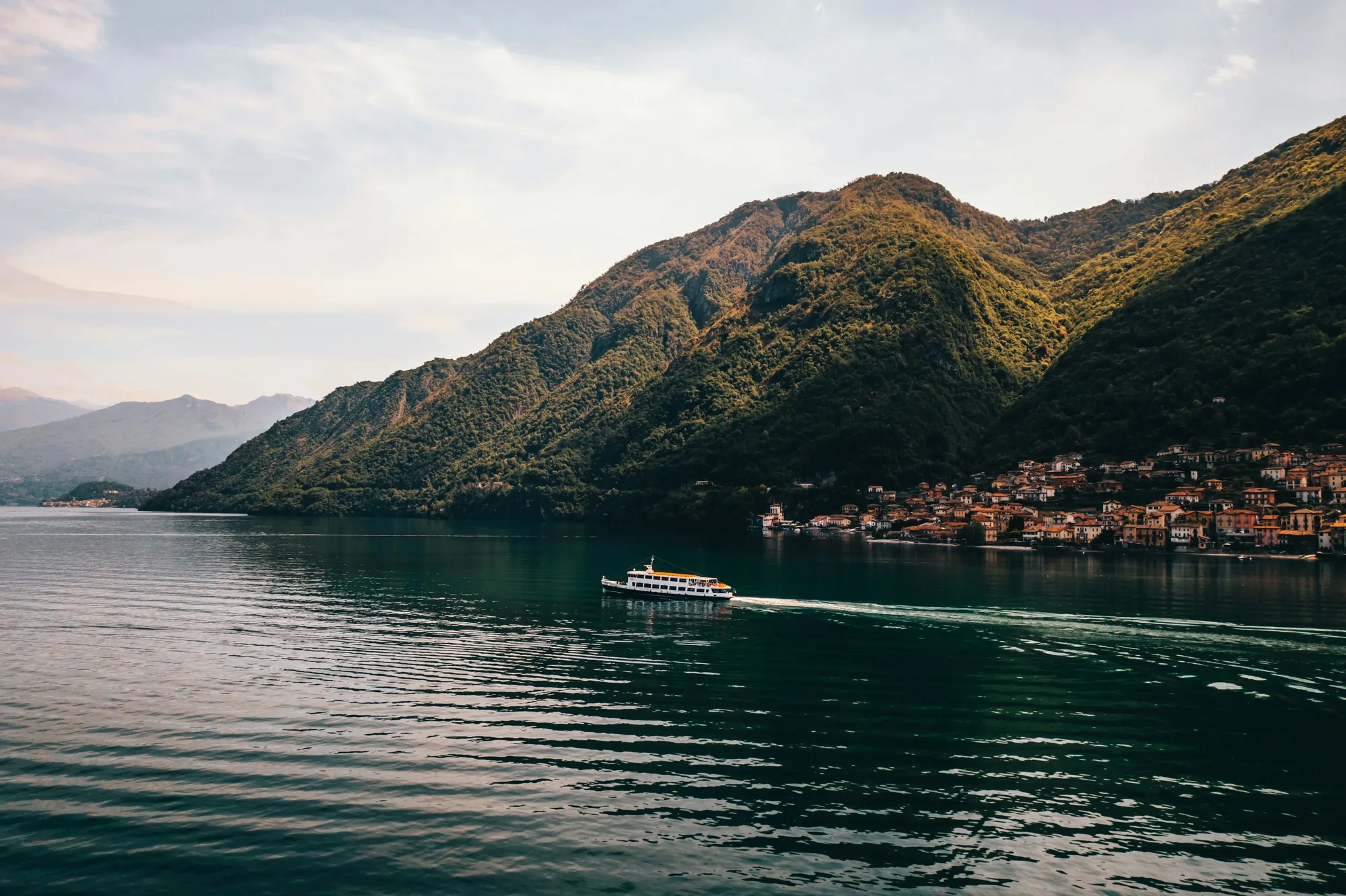 Bellagio · Lago di Como
Como & Surroundings
Como is the elegant urban gateway to the lake — a city where Roman origins, medieval rigour and Lombard refinement come together with unusual ease. At its centre stands the Duomo Santa Maria Assunta, begun in 1396 and completed over three and a half centuries; that long build gives it a particular architectural tension, in which Gothic, Renaissance and later forms blend into an unusually harmonious whole. Right next to it rises the Broletto, since the 13th century a symbol of the city's institutions and one of the most distinctive secular buildings in the old town.
Slightly back from the dense centre, Sant'Abbondio opens up a quieter, older side of Como. The basilica ranks among the great Romanesque churches of Lombardy and preserves the restrained gravitas that makes the region's ecclesiastical architecture so striking. For those who want Como not just as backdrop but as a layered cultural city, the Pinacoteca Civica is a rewarding addition: its collection spans from the Middle Ages to the present and makes plain how closely the city's art history is bound to the wider Lario.
Como is inseparable from Alessandro Volta. The Tempio Voltiano on the lakefront is regarded as the only museum in the world built as a memorial to a scientist; it preserves instruments, documents and reconstructions from the world of his research. A few steps away, the funicular to Brunate begins one of the classic changes of perspective on the lake: in about seven minutes you rise from the city into a much quieter setting of woodland and views.
Brunate itself lives less on monuments than on location and atmosphere. From here the wide topography of the southern lake opens up, and if you carry on as far as the Faro Voltiano, you reach a spot where commemoration and panorama overlap especially beautifully. The lighthouse was raised in 1927 in Volta's honour and still dominates the entire Como basin.
Silk belongs to Como's identity as much as the lake itself. The Museo della Seta describes itself as the only museum in the world to make the entire production process — from silkworm to fashion — fully legible, preserving not only machines, samples and tools but the industrial memory of a whole city. Como appears here not just as a pretty stage but as a place of work, invention and craft.
On the lakefront, Villa Olmo unfolds the city's grander side. The Neoclassical estate now belongs to the municipality and serves as a venue for exhibitions, events and culture; its park remains one of the most elegant public spaces on the entire lake. Open daily and free of charge — in summer until 11:00 PM. Right next door: the Lido Villa Olmo, one of the few public lake-bathing facilities on Lake Como.
museosetacomo.com →In sport, too, Como has a notable presence again. FC Como 1907 is currently in Serie A, combining the club's new international attention with the strong local roots of a tradition-rich side. The Stadio Sinigaglia, right on the water, is one of the most unusual football grounds in Italy: a stadium that doesn't fight the landscape but lives off it.
calciocomofc.com →South of Como lies Cernobbio, where the lake shows itself once again at its most aristocratic. Villa d'Este has stood since 1873 for the kind of international hotel culture that carried the name "Lago di Como" out into the world, while Villa Erba today bridges historic villa and modern venue as an important exhibition and conference centre. Both estates continue to shape the southwestern arm of the lake.
A different, more intimate note is struck by Villa Bernasconi. The restored Art Nouveau house is today a museum open to the public and tells its story deliberately as a "speaking house". The ornamental façade and its references to the silk industry make the villa one of the finest architectural counterpoints on the lake.
villabernasconi.eu →
Mountains & Nature
The Valle d'Intelvi opens a surprisingly quiet world of woods, high-altitude light and old villages just behind the west shore. The valley connects Lake Como with Lake Lugano and splits into two branches — one over San Fedele d'Intelvi, the other towards Osteno. Particularly striking is the Sighignola, the so-called Balcone d'Italia at 1,320 m — designated a FAI "Luogo del Cuore" — whose view sweeps far across Lake Lugano and into the Alps. A short forest path from the La Baita restaurant reaches the summit in 20 minutes, easy even with children.
Precisely because the valley relies on space, calm and depth of landscape rather than on spectacle, it makes a wonderful counterpoint to the more glamorous lakeside. The valley contains the mountain village of Plesio (750 m, above Menaggio) and the Val Sangra — a quiet side valley with chestnut woods, old paths and almost no tourism. The Valle d'Intelvi is also the homeland of the Magistri Intelvesi, the legendary itinerant master builders of the 17th century.
valleintelviturismo.it →If you're after the mountain world above Tremezzina, the area around Monte Crocione (1,641 m) and Rifugio Venini offers one of the most rewarding high-altitude landscapes on the western Lario. Monte Crocione, depending on the approach, is accessible even to less experienced alpine walkers; Rifugio Venini sits at 1,575 m between Monte Galbiga and Monte Tremezzo and is one of the classic viewpoints over the lake and the foothills.
These ridges combine the feel of a real mountain day with surprising proximity to the water. Classic route from Tremezzina: Argegno cable car up to Pigra (648 m climbed in 4 min), continue via Alpe di Colonno to Rifugio Venini, then on to the summit. Total ascent from Pigra ca. 3–4 h. The panorama reaches from the Dolomites to Monte Rosa — and takes in both arms of the lake at once.
rifugiovenini.it →On the Triangolo Lariano, nature and sporting history come together in a particularly lovely way. The Santuario della Madonna del Ghisallo is an official pilgrimage site and the patron sanctuary of cyclists worldwide; since 1949 the Madonna del Ghisallo has been the patron saint of cycling, declared so by Pope Pius XII. On the walls hang jerseys, bicycles and memorabilia from the great champions: Coppi, Bartali, Merckx, Pantani. An eternal flame burns in memory of cyclists who have died.
Right next door, the Museo del Ciclismo (since 2006) deepens the story with original bikes, a film archive and interactive stations — from the first Giro d'Italia in 1909 to the Tour de France of today. The area around Magreglio and Monte San Primo is thus not only scenically appealing but culturally unique. The Madonna del Ghisallo sits on a classic Giro d'Italia climb.
museodelciclismo.it →High above the lake runs another, today almost submerged layer of the landscape: the Linea Cadorna. The line of fortifications was built between 1915 and 1918 along the Swiss border, as defence against a possible attack through neutral Switzerland — built under General Luigi Cadorna, never used, but preserved in full: more than 300 km of roads, 400 km of mule tracks, 72 km of trenches.
In the province of Como the line ran from Monte Bisbino across the Val d'Intelvi, Monte Galbiga and Monte Crocione down to Monte Crocetta — directly above Tremezzina. Today the routes, military roads and individual positions form part of an extraordinary network of paths, where history and panorama are tightly bound up with one another. Particularly well-preserved sections can be found on the ridges to the west of the lake.
Among the great long-distance routes of the west shore is the Via dei Monti Lariani, a roughly 125-kilometre high-altitude trail from Cernobbio to Sorico, mostly on paths and mule tracks, that accompanies the western lake in a wide, quiet perspective. Above Menaggio rises La Grona (1,736 m) — the local mountain, reached via Breglia (750 m, bus C13 from Menaggio) and the Rifugio Menaggio at about 1,400 m (CAI, seasonally staffed, also via ferrata). Ascent from Breglia ca. 2–3 h; panorama: Lake Como, Lake Lugano, the Valais Alps.
If you prefer to stay closer to Tremezzina, the Greenway del Lago di Como offers the more accessible counterpart: a roughly 11.2-kilometre panoramic route through old villages, past villas, gardens and Romanesque churches, following the historic Via Regina. Reachable on foot directly from Cà de Sura: the Parco Val Sanagra — a nature reserve that describes itself as a place where history, untouched nature and local traditions meet. Along the way: the Museo Etnografico di Grandola e Uniti and the historic Fornace Galli on the riverbank. No car needed.
greenwaylagodicomo.com →Day Trips
Milan is the most obvious great counterpoint to the lake: urban, monumental, fast and culturally almost inexhaustible. At its centre stand the Duomo and Santa Maria delle Grazie with Leonardo's Last Supper — two very different but equally defining faces of the city. The Last Supper requires reservation, ideally months in advance. For art: the Pinacoteca di Brera and the Pinacoteca Ambrosiana; for atmosphere, the Navigli quarter with its canals and bars.
For a day trip, Milan is less mandatory sightseeing than a deliberate contrast to the quieter rhythm of the Lario. By car about 60–80 min via the A9; by train from Como San Giovanni about 45 min to Milano Centrale (Trenord, hourly).
Bergamo is one of the most beautiful historic day trips within reach of the lake. The Città Alta lives by its Venetian walls (UNESCO World Heritage since 2017), its squares and its remarkably unbroken urban silhouette. At its heart: Piazza Vecchia with the Palazzo della Ragione (12th c.) and the Cappella Colleoni — one of the most important Renaissance chapels in northern Italy.
At the same time, with the Accademia Carrara, the city holds one of the major art museums of northern Italy, whose collection runs from the Gothic to the 19th century and includes works by Bellini, Mantegna, Botticelli and Raphael. To experience urban form and painting in a single place is unusually rich here. Around 60–70 min by car.
Monza brings together motor sport, monarchy and parkland in a rare combination. The Autodromo Nazionale Monza is officially the "Temple of Speed" and has existed since 1922; tours and guided track-walks can be booked. In the same park area lies the Villa Reale di Monza — an 18th-century Neoclassical royal palace with gardens and the largest walled park in Europe (ca. 750 ha, open to the public).
Add to that the Duomo, with the Corona Ferrea kept in the Cappella di Teodolinda — one of the most symbolically charged works of Western Christian goldsmithing, used to crown the kings and emperors of northern Italy. About 40 min by car.
Lugano may be the most elegant cross-border trip of them all. The city combines Swiss precision with Italian ease, and draws its charm from that balance — about 30–40 min by car via the A2 (border crossing at San Pietro in Stabio). For the overview, Monte San Salvatore and Monte Brè are both accessed by their own funiculars.
Culturally, MASI — Museo d'Arte della Svizzera Italiana sets a clear accent: born from the merger of the Museo Cantonale d'Arte and the Museo d'Arte, it is one of the most important art institutions in Italian-speaking Switzerland. A third way to get there: the Lugano–Menaggio Autopostale line of the Swiss Postbus. Swiss francs or credit card; no Schengen border crossing required.
masilugano.ch →Chiavenna is a trip for those who prefer depth to spectacle. The town lives by its alpine character, its old paths and above all its crotti — those natural rock cellars with a constant cool draught of air, part of local culture for centuries and today home to restaurants and wine stores. Worth seeing: the Parco Marmitte dei Giganti (giants' kettles in the rock) and the Collegiata di San Lorenzo with the Pace di Chiavenna (12th-c. peace chalice).
Just nearby, in Prosto di Piuro, rises Palazzo Vertemate Franchi — one of the most remarkable secular Renaissance buildings in Lombardy, with magnificent frescoes, historic interiors and gardens. Chiavenna is also the gateway to the Val Bregaglia and the Maloja Pass on to St. Moritz. Local specialities: Scimudin cheese and bresaola from the Valchiavenna. About 60 min by car.
The Valtellina opens a different, distinctly alpine world to the east of the lake. Its terraced vineyards count among the great cultural landscapes of northern Italy — 70 kilometres of terraced slopes along the sun-facing valley flank, with crus such as Sassella, Grumello, Inferno, Valgella and the great Sforzato. All from the Nebbiolo grape, here called Chiavennasca. Sondrio, the valley's capital, is about 90 min away.
Tirano is the southern terminus of the Bernina Express: the Albula and Bernina lines of the Rhaetian Railway have been UNESCO World Heritage since 2008, and even a partial stretch — as far as Poschiavo or Ospizio Bernina — makes for an extraordinary experience. In the town itself: the Santuario della Madonna di Tirano, one of the most important pilgrimage churches in Lombardy.
Bernina Express → rhb.chBormio is the trip into the high mountains. The town combines thermal baths, a historic centre and the immediate proximity of the Stelvio National Park — one of the oldest and largest national parks in Italy. The Passo dello Stelvio (2,758 m), with its 48 hairpins, is one of the most dramatic pass roads in the Alps. This concentration of high mountains, pass roads, spa tradition and winter sport makes Bormio a destination that, even as a day trip, opens up a completely different scale of landscape.
The Terme di Bormio — thermal springs used since Roman times — offer the Bagni Nuovi and Bagni Vecchi thermal baths with mountain panoramas. Combine with a side trip to Livigno (duty-free, just over the pass). About 2.5 hrs by car.
St. Moritz stands for perhaps the most fashionable extension of a lake stay into the high Alps. If you go via Tirano on the Rhaetian Railway, the journey itself is already part of the trip. Another option: the Lugano–Menaggio–St. Moritz Autopostale line of the Swiss Postbus — a direct cross-country bus that links Menaggio with the Engadine. By car: about 2.5–3 hrs via Chiavenna and the Maloja Pass.
On site, the Segantini Museum sets a cultural highlight: it holds the most comprehensive and important collection on Giovanni Segantini (1858–1899), one of the great renewers of Alpine painting. His monumental triptych La Vita, La Natura, La Morte is one of the most striking works of art in the Alpine region. In its own way, St. Moritz binds landscape, altitude and art history together.
segantini-museum.ch →Practical Info
The Centrolago ticket from Navigazione Laghi is a day pass (ca. €17.50/person) for the central zone of the lake — Menaggio, Bellagio, Varenna, Cadenabbia, Tremezzo and Lenno. It allows any number of journeys in a single day. If you plan more than three crossings, the ticket clearly pays off. Available at the piers or online at navigazionelaghi.it →
A classic with the Centrolago ticket: morning ferry to Bellagio (15 min), a walk through the salite, Villa Melzi. At midday on to Varenna (20 min) — Villa Monastero, the Lovers' Walk, lunch at the harbour. In the afternoon, back via Cadenabbia to Tremezzo. All three shores in one day — the best of Lake Como.
Como deserves at least a full day — the Duomo, the Museo della Seta, the Tempio Voltiano, Villa Olmo, the Brunate funicular and the lakefront promenade can hardly be done in half a day. By ferry from Tremezzo the crossing takes about 90 minutes (shorter on the fast service); by car via the SS340 around 30 minutes.
Argegno lies on the west shore, about 15 km south of Tremezzina. Reachable by bus C10 or by boat from Tremezzo. The cable car climbs 648 m in 4–6 minutes (one of the steepest cable cars in Italy). Up at Pigra: walking paths, sweeping views, complete quiet. Price: ca. €4.10 one way. Opening hours: daily ca. 9:00 AM–5:00 PM. atm.it →
Very well — with the Centrolago ticket: Villa Melzi in Bellagio in the morning (€10, ca. 1.5 h), then by ferry to Varenna, Villa Monastero (€13–15, ca. 2 h). Both gardens are unique and stylistically very different — the Neoclassical park in Bellagio, the long lakeside garden with exotic planting in Varenna. With this trip you'll have seen two of the lake's loveliest garden estates in a single day.
A car is not necessary for most excursions. Bus line C10 (Como–Menaggio–Colico) serves all the villages on the west shore. The ferry piers at Tremezzo and Lenno offer connections to Bellagio, Varenna, Cadenabbia and Como. Timetables: ASF bus → · Navigazione Laghi →
Your base on the lake · Discover Cà de Sura · Book your stay